
Greetings & Etiquettes in Myanmar
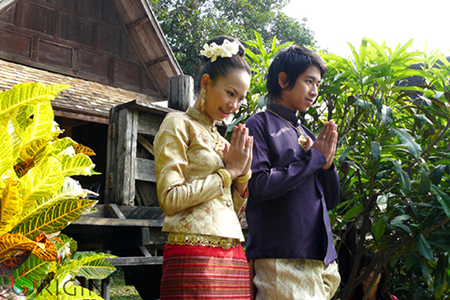
The traditional greeting in Myanmar is a bow whilst placing both hands on your stomach. Often younger people will bow and an older person will simply nod in response. This is usually done by students to their teachers or children or grandchildren to their elders (parents, aunts, uncles, and grandparents), in order to express gratefulness and admiration and show an opportunity to ask for forgiveness, often involving gift-giving. It is traditionally done on New Year's Day of Thingyan festival and during the month of Thadingyut (roughly October), which marks the end of Vassa, the Buddhist Lent.
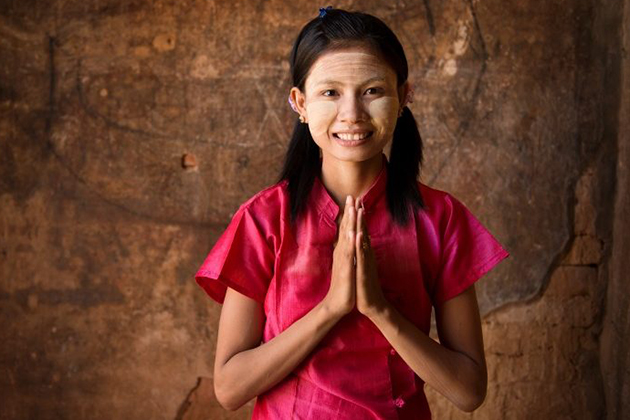
Myanmar culture is basically Buddhist and so much of the accepted etiquette pertains to Buddhist beliefs. Monks should be greeted with three Southeast Asian bows. To greet monks, place your hands together in prayer position, hold them at face level and bow deeply. To pay deep respect to a monk, kneel on the ground and touch your palms and forehead to the floor three times. When talking to a monk try if you can to have your head lower than his. This can be achieved by bowing slightly or sitting down. If a monk is sitting down, you should also do the same thing. Women should not touch a monk or give objects directly to him (instead of place the object on a table or some other surface near the monk). On buses and trains, people customarily give up their seats to monks.
Some Burmese (generally urban residents and non-Buddhists) shake hands to greet. In doing so, they may support their right elbow in their left hand whilst they shake another person’s hand.
Use people’s appropriate titles when addressing them (e.g. Mr, Mrs) unless they are children.
The popular formal greeting in Burmese is “Min-ga-la-ba shin” (said by a woman) or “Min-ga-la-ba khin-bah” (said by a man). Both are translated as sayings like ‘Hello’.
Below are some useful phrases you can apply when making Myanmar Tours
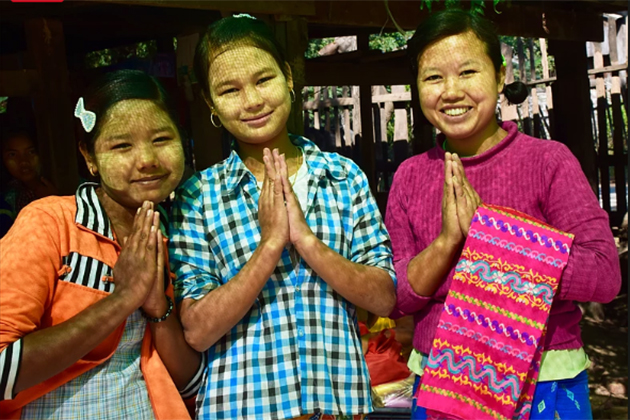
Useful Phrases for Myanmar Travel
Here is some of the most useful phrase for tourists in Burma trips.
| English | Myanmar |
| Auspicious to you all | Mingalar Ba |
| How are you? | nei kaun: ye. la: |
| Good morning | mingala nan ne khin: ba |
| Good afternoon | kaun:tho:nei Khin: ba |
| Good evening | kaun: tho: nya. nei khin: ba |
| Good night / Good Bye | thwa: bi |
| Please to meet you. | twei. ya. da wan: tha ba de |
| See you again | noun gya. thei: da paw. |
Yes / No Words
| English | Myanmar |
| Yes (Male) | hou' ke khin bya. |
| Yes (Female) | hou'ke shin. |
| Yes (both genders) | in: |
| No | hin. in: |
| No (it isnt) | hin. in: ma hou' phu |
| Okay / Alright / Agreed | kaun: bi |
| It's all right | ya ba de |
Polite Phrases
| English | Myanmar |
| Thank you | kyei: zu: tin ba de |
| Thank you very much | kyei:zu: amya: gyi: tin ba de |
| You are welcome | kyo zo ba de: |
| I beg your pardon (apology). | sei' mashi. ba ne |
| I beg your pardon (Male) | khin mya (?) |
| I beg you pardon (Female) | Shin (?) |
| Sorry | sel' mashi ba ne. |
| Excuse me | thi: khan ba |
| You are so kind. | a: na zaya gyi: |
| Don't feel awkward. | a: ma na ba ne |
| Can I help you? | ku nyi ba ya. zei |
| I don't mind. its alright. | kei' sa mashi ba bu: |
| Good Luck | kan kaun: ba zei |
Questions and Requests
| English | Myanmar |
| How much? | be lau'le: |
| What's that? | e: da ba le: |
| Where is the restroom? | ein tha be ma shi. tha le: |
| What time is it? | bel na nar yi shi byi lel |
| May I go now? | thwa: gwin. pyu. ba oun: |
| Do you understand? | khamya: na: le tha la: |
| May I take a photograph? | da' poun yai' lo. ya. mala: |
| May I use the telephone? | te li hpon: thoun: lo. ya.ma la: |
| Where is ...? | ...be na: ma le: |
| How much do I owe you? | be lau' kya. tha le: |
| I want to go ... | ...go thwa:gyin ba de |
| I want... | ...gyin de |
| Which way? | be lan ga thwah ya ma ke' |
| How Far? | be' lauk way tha le' |
| Where are you going? | be thwa ma lou le' |
Other Myanmar Phrases
| English | Myanmar |
| Very expensive | zei: mya:de |
| I cannot speak Myanmar | Myanmar lo mata' bu: |
| I don't understand | na: ma le bu: |
| Really? | da ge la: |
| It's impossible | ma hpyi' nain bu: |
| Possibly | hpyi' nain ba de |
| Beautiful! | h!a. lai' ta |
| Keep the change | maan: ne. daw |
| Be careful | tha di: hta: ba |
| Be careful. don't drive too fast | tha di: hta: ba: phyei: byei: maun: |