


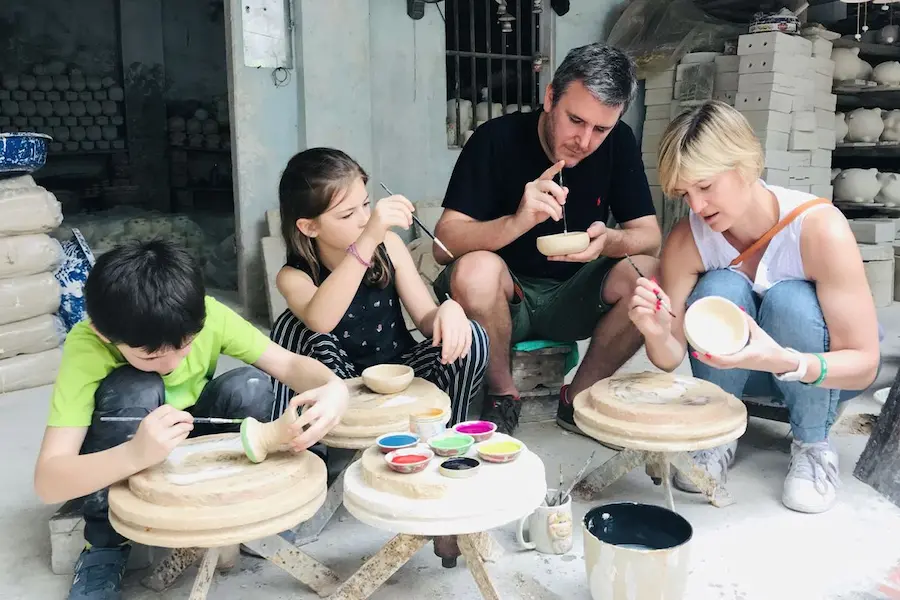
A bowl takes minutes to shape and far longer to master. Visit a working pottery village and that difference becomes clear: an artisan knows when the clay is too wet, when the wall is too thin, and how much pressure a turning hand can bear. For travelers, the reward is a closer look at a craft that still belongs to everyday life in Vietnam.
There is no single experience shared by all Vietnam pottery villages. Bat Trang near Hanoi is relatively easy to add to a city stay and has established visitor workshops. Thanh Ha works naturally with time in Hoi An. Phu Lang rewards travelers curious about rural craft communities, while Chu Dau tells a story through refined ceramics. Bau Truc introduces a distinct Chăm tradition in the south-central region. Each deserves more than a quick souvenir stop.
At Viet Vision Travel, our half-day Bat Trang tour already pairs a workshop visit with the village's history and time to try shaping clay. That is the approach we recommend elsewhere too: choose the village that fits your actual route, allow time to meet the people making the work, and check what a particular studio can offer before promising yourself a class.
Which Vietnam pottery villages fit your itinerary?
| Village | Best route fit | What makes the visit worthwhile | Hands-on expectation |
|---|---|---|---|
| Bat Trang | Hanoi | Working workshops, ceramics museum and a broad range of finished wares | Visitor pottery sessions are available; agree on the activity before arrival. |
| Chu Dau | A dedicated northern craft excursion | The history and decorative style of a revived ceramic tradition | Prioritize a guided look at production; arrange any participation in advance. |
| Phu Lang | A slower day beyond Hanoi | Earth-toned pottery, kilns and a village setting | Some hosts offer practical activities; confirm the studio and format. |
| Thanh Ha | Hoi An | Traditional earthenware and a compact village visit | Artisan demonstrations and opportunities to try making pottery are available. |
| Bau Truc | A south-central coast itinerary | Chăm hand-building techniques and cultural context | Arrange an artisan-led introduction rather than assuming a drop-in class. |
These Vietnam pottery villages are spread across different regions. Compare them by where you are staying and how much time you can spend with a maker. Treat them as choices along your journey, not a five-stop route to squeeze into one holiday.
Bat Trang near Hanoi for a first pottery experience

If you have an open morning or afternoon in Hanoi, Bat Trang is the simplest place to begin exploring Vietnam pottery villages. The village sits by the Red River, close enough for a half-day excursion yet different in pace from central Hanoi. It offers the combination many first-time visitors want: workshops, narrow village streets, a ceramics market and a museum that places what they have seen in a wider history. Vietnam's official tourism site also recommends a pottery workshop as part of a longer visit.
The worthwhile moment is often the comparison between watching an experienced potter and trying the same movement yourself. A vessel that looked effortless a minute earlier may collapse under an unsteady hand. That is a useful way to understand the skill behind the finished pieces, whether you travel with children or simply enjoy learning by doing.
Our Bat Trang Ceramic Village Tour includes an introduction to the craft and a chance to shape or decorate a piece. For a more involved northern itinerary, our Cultural Trails of Northern Vietnam pairs Bat Trang with Dong Ho's printmaking tradition. Ask about firing and collection arrangements if taking your own creation home matters: making a piece during a short visit does not necessarily mean it will be finished and ready to pack that day.
Among Vietnam pottery villages, Bat Trang is our most straightforward recommendation for travelers who want a structured, hands-on introduction without rearranging their entire trip.
Chu Dau for travelers interested in ceramic history
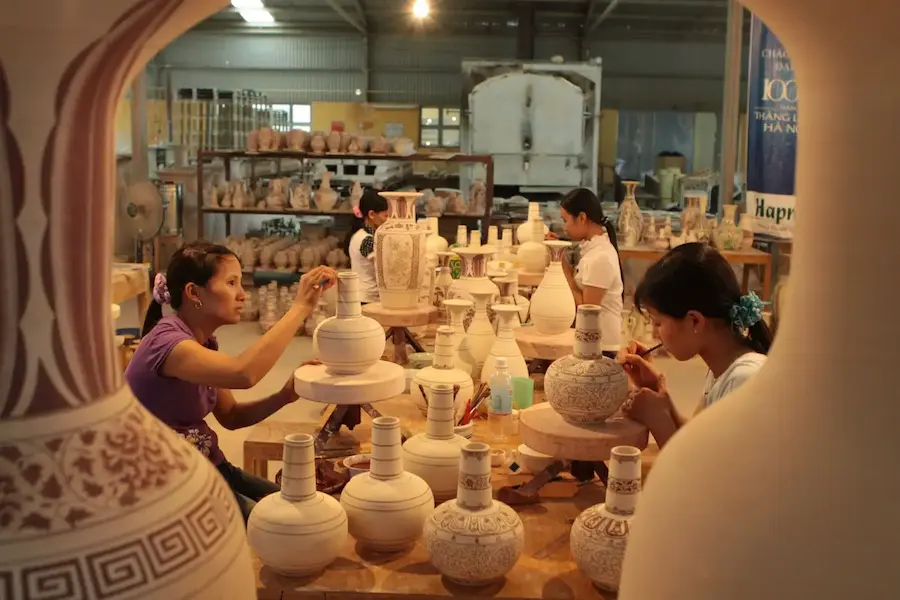
Chu Dau belongs on a different kind of day. Travelers comparing Vietnam pottery villages should go for the story of a ceramic tradition that was once significant and later revived. Look closely at the decorated surfaces: floral motifs, blue-and-white patterns and the finish of individual pieces provide more to discuss than a row of shop shelves.
This is a good fit for travelers who enjoy museums, design or the history of trade and production. Arrange a guided visit to a working facility where possible, ask to see the stages from shaping to decorating, and leave space for questions about what is made for contemporary buyers. Hai Phong's tourism authorities describe visitors seeing the pottery-making process at Chu Dau.
We would plan Chu Dau as a deliberate northern craft excursion rather than suggest it as an automatic add-on to a tightly timed Hanoi–Ha Long transfer. Of the Vietnam pottery villages in this guide, it is particularly rewarding when your interest is in the work itself and how a historical style survives through present-day makers.
Phu Lang for a quieter craft-village day
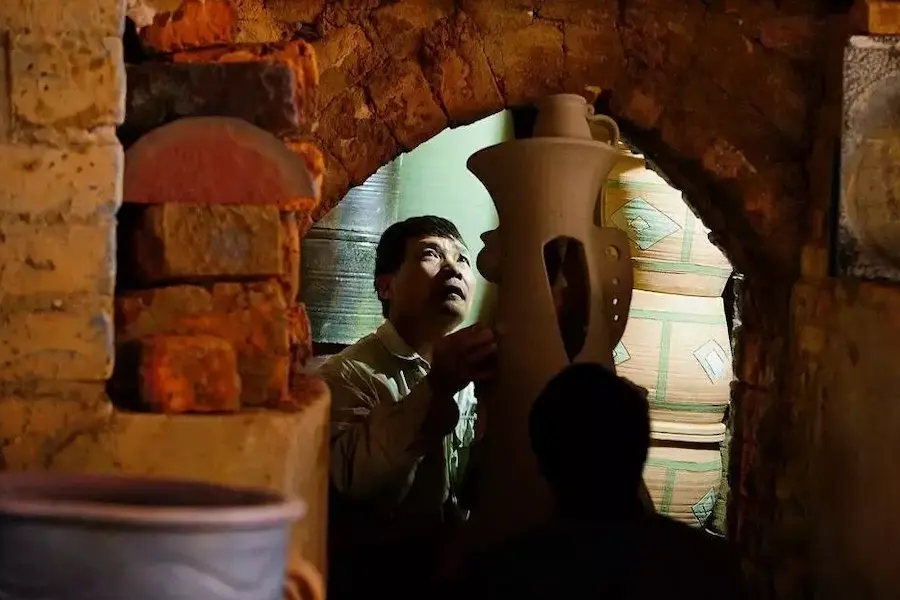
Phu Lang, in Bac Ninh, has a different visual language from Bat Trang's polished display rooms. Among Vietnam pottery villages, its large jars, earthy colors and traditional kilns make the production side of the village part of the experience. The appeal extends beyond pottery: you are spending time in a northern rural setting where the craft is visible in daily life.
Some local workshops receive guests and offer practical activities, but this is a place where advance arrangements improve the visit. For travelers who want to understand Vietnam pottery villages as working communities, a host who can explain the material, the firing process and why a maker chooses one form over another adds far more than a hurried photo stop. Vietnam's rural-tourism portal describes visitor activities at several Phu Lang workshops and the village's developing community tourism.
For couples or families who prefer an unhurried day outside Hanoi, Phu Lang can be one of the more memorable Vietnam pottery villages. We would only build it into a route after confirming the workshop, transport time and how much of the day you actually want to devote to the visit.
Thanh Ha for a meaningful pause in Hoi An
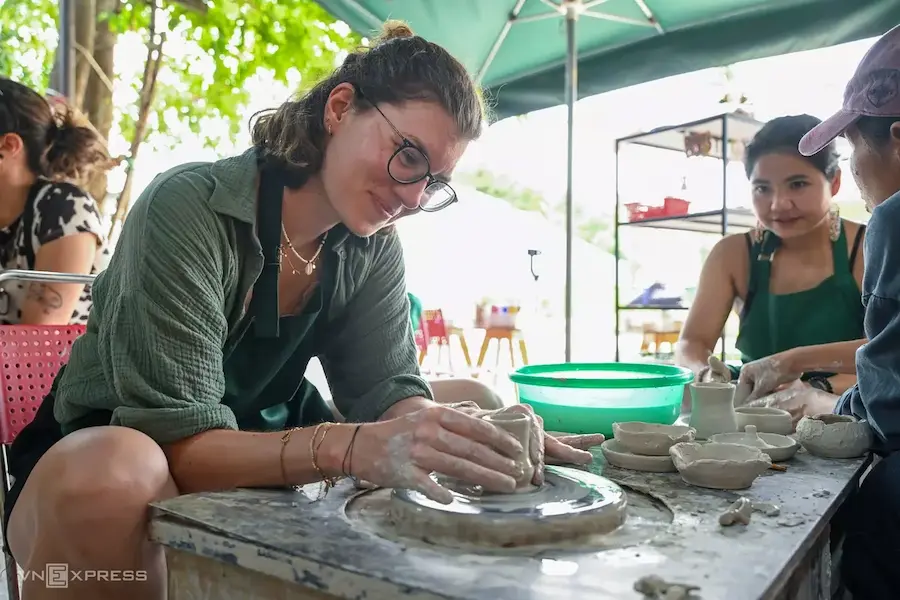
Hoi An already invites travelers to shop for handmade objects. A visit to nearby Thanh Ha gives those objects a place and a process. For visitors to Vietnam pottery villages, that link between the object and its maker is often the point. Artisans still demonstrate pottery-making, and visitors can find opportunities to try it themselves. The Hoi An cultural-heritage authority describes people exploring the working spaces, making their own pieces and visiting kilns.
The village suits a relaxed Hoi An day: spend time in the old town, then make room for the people whose craft has long been connected with the area. Do not rush straight from the entrance to the activity table. Watching how an artisan works, then asking what the piece is used for, can make even a short demonstration more worthwhile.
Of the Vietnam pottery villages accessible during a classic north-to-south holiday, Thanh Ha is one of the easiest to pair with an existing stop. If your party includes children, ask what sort of session is available on your chosen day and allow time for washing up and a slower return to town.
Bau Truc and the Chăm tradition of shaping clay by hand
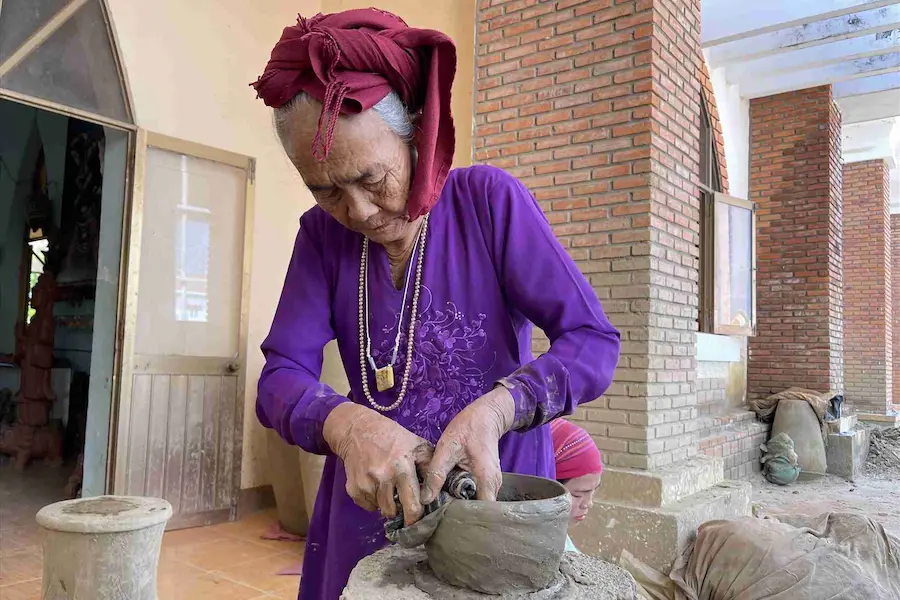
Bau Truc deserves careful attention because its technique differs from the wheel-based picture many visitors have of pottery. Understanding this difference is one reason to explore Vietnam pottery villages beyond the best-known stop near Hanoi. In this Chăm craft tradition, makers shape clay by hand using simple tools, moving around the piece as they work. Vietnam's official tourism site describes the method and the village's connection to Chăm cultural life.
UNESCO inscribed the art of pottery-making of the Chăm people on its List of Intangible Cultural Heritage in Need of Urgent Safeguarding in 2022. The inscription recognizes the cultural practice; it should not be misread as a separate UNESCO World Heritage designation for the village. See the UNESCO record.
This is a stop to approach with curiosity and respect, not as a place to collect a quick demonstration. Ask your guide to explain who makes the pottery, how the techniques are passed on and which patterns carry meaning. Buy directly from makers where practical, and ask before photographing a person at work.
Bau Truc is a sensible addition if your route already takes you through the Phan Rang area or along the south-central coast. Among Vietnam pottery villages, it offers perhaps the clearest reason to slow down and listen before trying to make something yourself. Any hands-on meeting should be agreed with an artisan in advance.
How we would build a pottery visit into a Vietnam trip
A pottery stop works best when it follows the shape of the holiday. You do not need to visit all five to understand the craft. Here are three ways we would use Vietnam pottery villages in a private itinerary:
- A first visit to Hanoi: Choose Bat Trang for a half-day with a guide and a confirmed workshop. It gives travelers a practical introduction while leaving another part of the day free.
- A slower northern journey: Consider Phu Lang or Chu Dau as a dedicated craft day if the interest in ceramics is genuine. Plan the driving and host visit before adding other stops.
- A north-to-south cultural holiday: Visit Bat Trang near Hanoi, then Thanh Ha while staying in Hoi An. Add Bau Truc only if the route reaches the south-central region with enough time to do the visit justice.
The difference between a good craft visit and a forgettable one is often the planning around it. Before booking Vietnam pottery villages into an itinerary, find out whether your group will watch, shape, paint or simply explore; ask whether the studio can host your party in English; and check whether a finished item can be collected or shipped after firing. Exact arrangements depend on the maker and the day.
Practical questions before you book
Can I take home pottery I make on the same day?
Sometimes you may be able to take home a small item that does not need further firing, or purchase a finished piece. For a piece you shape or paint yourself, ask the specific workshop about drying, glazing, firing and collection before your visit. Those steps cannot be assumed to fit into a half-day tour.
Are Vietnam pottery villages suitable for families?
Yes, especially when children enjoy making things. Bat Trang and Thanh Ha have established visitor activities, though the format varies by studio. Tell the organizer the children's ages and whether anyone has limited mobility; village streets and workshop surfaces can be uneven, and the right activity depends on the group.
Should I choose one village or several?
Most travelers will get more from one well-planned visit than several rushed ones. Among Vietnam pottery villages, choose Bat Trang if convenience and a first workshop matter most, Thanh Ha if Hoi An is already on your route, or Bau Truc if learning about Chăm craftsmanship is a meaningful part of your south-central journey. Add the northern specialist stops when you have time for them.
Plan a cultural journey with Viet Vision Travel
The best Vietnam pottery villages to visit are the ones that fit the places you already want to see and the sort of encounter you hope to have. Tell us your travel dates, group size, interests and preferred pace. Explore our Vietnam vacation packages for ideas, then share your trip plans with Viet Vision Travel so our local team can shape a private itinerary around the workshops and cultural stops that make sense for you.